ACLS Course Guide: Everything You Need to Know

Advanced Cardiovascular Life Support (ACLS) certification trains healthcare providers to manage cardiac emergencies, complex arrhythmias, and post-cardiac arrest care. This comprehensive course is designed for nurses, doctors, paramedics, and other healthcare professionals who respond to cardiovascular emergencies in hospitals, clinics, and emergency settings.
You'll learn high-quality CPR, airway management, drug administration, and team-based resuscitation skills that meet requirements for most healthcare employers across Canada.
What Is ACLS Training
ACLS provides advanced life support skills beyond basic CPR. The course covers systematic approaches to adult cardiac arrest, stroke, and acute coronary syndromes. You'll learn to identify arrythmias, administer emergency medications, and lead resuscitation teams effectively.
The training emphasizes evidence-based algorithms from the Heart & Stroke Foundation. These protocols guide decision-making during high-stress emergency situations when every second counts.
According to the Heart & Stroke Foundation, survival rates from cardiac arrest can reach 74% when effective CPR and defibrillation occur within the first few minutes. ACLS certification demonstrates competency in these advanced cardiac life support techniques.acls-course-guide-everything-you-need-to-know
"ACLS training gives healthcare providers the confidence and competence to respond immediately during cardiac emergencies. The structured algorithms reduce decision fatigue when every second matters," says Ahmed Kermalli, director and instructor at Lifesaver YEG.
Who Needs ACLS Certification
Healthcare providers in acute care settings must maintain current ACLS certification. This includes:
Emergency room physicians and nurses
Critical care and cardiac unit staff
Cardiac catheterization lab technicians
Respiratory therapists
Paramedics and advanced care paramedics
Flight nurses and critical care transport teams
Healthcare students often complete ACLS training before clinical rotations in emergency or critical care areas. Some employers require certification within 90 days of hire for eligible positions.
ACLS Course Content
The ACLS curriculum covers six core areas of emergency cardiovascular care. Each module builds on previous knowledge while introducing complex clinical scenarios.
Cardiac Arrest Management
You'll learn the ACLS cardiac arrest algorithm for both shockable and non-shockable rhythms. Training includes high-quality chest compressions, proper ventilation techniques, and defibrillation procedures. The course emphasizes minimizing interruptions during CPR cycles and coordinated team responses.
ECG Recognition and Emergency Medications
ACLS training includes recognition of life-threatening arrhythmias like ventricular fibrillation, ventricular tachycardia, asystole, and pulseless electrical activity. You'll learn proper dosing and administration for ACLS drugs including epinephrine, amiodarone, adenosine, and atropine.
Airway Management
The course covers advanced airway techniques beyond basic bag-mask ventilation. You'll practice supraglottic airway insertion and coordinate airway management with chest compressions while maintaining proper ventilation rates.
How Long is the ACLS Course
ACLS training follows a blended learning format: online modules plus in-person skills practice. The online component covers theoretical knowledge at your own pace. Small classes for more hands-on practice ensure adequate time with certified instructors.
Initial ACLS certification requires approximately 12-16 hours total. Recertification courses are shorter at 6-8 hours for healthcare providers maintaining current skills.
Hands-on Training
Heart & Stroke accredited programs ensure training meets national standards. These certifications are widely accepted by healthcare employers across Alberta and Canada.
"The simulation-based approach in ACLS training allows healthcare providers to practice critical skills in a safe environment before applying them in real emergencies. This builds both competence and confidence," notes Ahmed.
What to Expect During Training
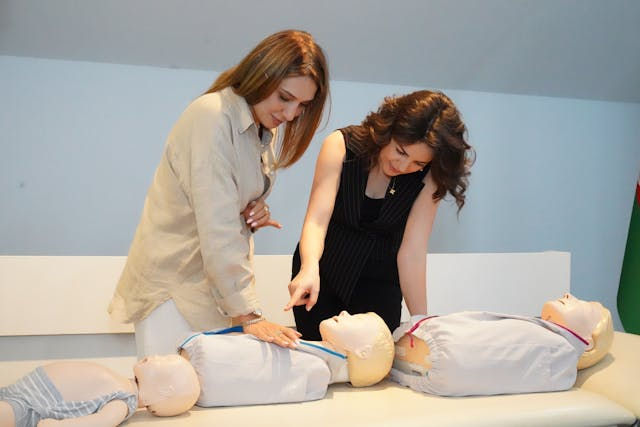
ACLS courses use high-fidelity mannequins and simulation equipment. You'll practice on realistic models that respond to interventions like real patients. Instructors guide you through megacode scenarios combining multiple emergency situations.
Assessment includes written examinations and hands-on skill demonstrations. You must achieve minimum scores on both components to receive certification.
Prerequisites and Certification
ACLS requires current Basic Life Support (BLS) Provider certification as a prerequisite. BLS skills form the foundation for advanced interventions taught in ACLS.
Review basic ECG interpretation and familiarize yourself with the arrhythmias that are covered before attending. The pre-course assessment helps identify knowledge gaps so you can focus study time effectively.
ACLS certification is valid for two years. Immediate electronic certification is issued upon successful completion, available for download and sharing with employers immediately.
Career Benefits
ACLS certification opens career opportunities in acute care settings. Emergency departments, critical care units, and cardiac catheterization labs require this training. Certified healthcare providers often qualify for higher-paying specialty positions that frequently list ACLS as a requirement.
The training enhances clinical confidence when managing cardiac emergencies. Healthcare providers report feeling better prepared for high-acuity situations after ACLS completion.
Choosing Your ACLS Provider
Look for Heart & Stroke Foundation approval when selecting a course. Small classes provide more hands-on practice and individual attention. Lifesaver YEG maintains small classes for optimal learning experiences with convenient scheduling and transparent pricing.
Frequently Asked Questions
How long does ACLS certification take?
Initial ACLS certification requires 12-16 hours including online modules and in-person skills practice. Recertification courses are typically 6-8 hours.
Is ACLS certification accepted across Canada?
Yes, Heart & Stroke Foundation accredited ACLS certification meets national standards and is widely accepted by healthcare employers throughout Canada.
Can I take ACLS without current BLS certification?
No, current BLS certification is required. Basic life support skills form the foundation for advanced techniques taught in ACLS.
When should I renew my ACLS certification?
ACLS certification expires two years from issue date. Schedule renewal training 2-3 months before expiration to maintain continuous certification.
Ready to advance your emergency care skills? Book your seat in an ACLS course today.
Our Heart & Stroke accredited training provides small classes, blended learning, and immediate electronic certification to meet your professional requirements.


Comments